Borrow, Share or Buy: Choosing Kit for a First Try
Choosing kit for a first try is easier when you compare access, fit, cost and likely reuse before deciding what to borrow, share or buy.
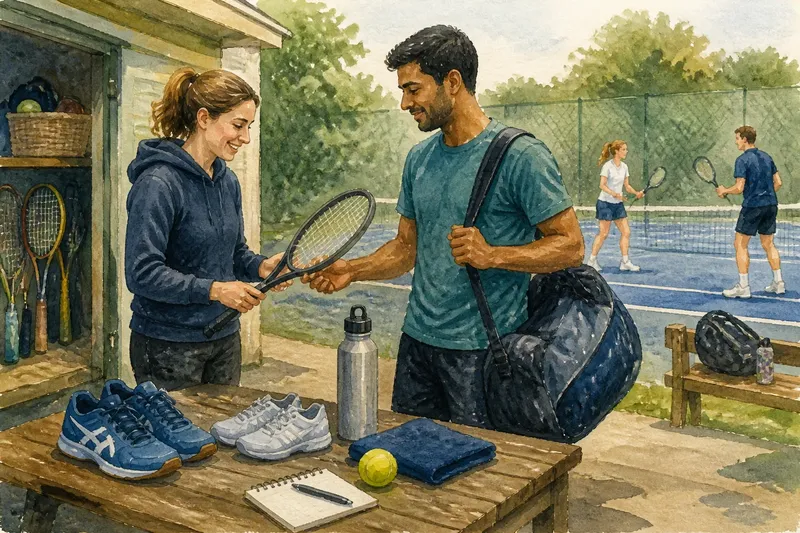
You have a place booked at the local tennis club, but no racket in the hall cupboard. Choosing kit for a first try does not have to mean buying a full set before you know whether you enjoy playing. Borrowing, sharing and buying each solve a different problem: getting access, coordinating equipment, or having reliable kit of your own.
For a first session, start with what the activity requires and what you already own. Then weigh how easily you can get suitable equipment, whether it fits, and how likely you are to use it again. The best choice may be different for a borrowed club racket than for footwear or protective gear.
What does the session actually require?
Ask the club or session organizer what participants need to bring and what is available on site. A casual introduction may include loan equipment, while a club session could expect you to bring certain items. The answer can vary by activity and by session.
Make a short list with three headings: required, useful, and optional. For a beginner tennis session, a racket may be required but available to borrow; comfortable clothes and court-appropriate shoes may be useful; a personal can of balls may be optional if the club provides them. For a beginner rugby session, a ball may be shared, while suitable boots or a mouthguard may be personal items with a closer fit or safety role.
Check any equipment instructions and ask the club what it lends. For items involving safety, fit, or specific rules, follow the manufacturer’s instructions and local requirements; ask a qualified coach or other appropriate professional if you are unsure.
When is borrowing the simplest choice?
Borrowing suits a one-off try when the club, a friend, or a community equipment library can lend the needed item without much hassle. It keeps you from purchasing gear before you know whether you want to continue, and it can offer access to equipment designed for the activity rather than a substitute you already own.
Club loan kits are often the most convenient source because they are meant for the session. Ask in advance what sizes or types are available, whether you need to reserve an item, and where to return it. If a friend lends you something, agree on the return time and condition so neither of you has to guess afterward.
The main trade-off is limited choice. A loan racket may feel heavier than you prefer, or a borrowed pair of cleats may not fit comfortably. If the item is awkward, unfamiliar, or unsuitable for the session, tell the coach or organizer before taking part rather than forcing it to work. Borrowing is most useful when access is easy and the fit is acceptable for the activity.
When does sharing work better?
Sharing makes sense when a group can use common equipment together, especially items that do not need an individual fit. A club ball, cones, a portable net, or training markers can serve several participants. Sharing can also help when one person in a household is trying an activity and another already owns general-purpose gear.
It depends on coordination. If several people need the same item at once, there may not be enough to go around. Ask who is bringing it, how it will get to the venue, and whether the session organizer has a backup. Do not assume that equipment on a shared field or in a clubhouse is available to take without permission.
Sharing is less straightforward for personal items such as shoes, helmets, mouthguards, or clothing that needs close contact and a precise fit. For those, use equipment approved for the intended activity and check that it is clean, intact, and suitable for the participant. A shared source may still be possible if the club provides properly maintained, individually fitted options, but ask rather than assume.
When is buying worth considering?
Buying can be sensible when you already know the activity interests you, when suitable loan gear is hard to access, or when fit matters enough that borrowed equipment would get in the way. It also gives you control over the item’s condition and availability for future sessions.
For a first purchase, keep the choice narrow. Buy only what is needed for the next stage, not a complete collection of equipment. Look at beginner or entry-level models, and consider local sports shops that let you ask questions in person. A secondhand shop, club swap, or community marketplace may offer another route, but inspect the item and confirm it is appropriate for the activity before committing.
Buying does not automatically mean choosing the most advanced or expensive option. A simple racket, ball, or pair of shoes that suits the session may be more useful than specialist gear you are not ready to use. If you expect to attend again, think about whether the item can serve ordinary practice as well as organized sessions.
How should you compare the three options?
Use the same questions for each item rather than making one decision for all your kit. A tennis racket might be easy to borrow, while shoes may be more comfortable to own. For a field sport, a club might provide balls but expect participants to bring footwear that fits them.
- Access: Can you get the item before the session, and is it available at the time you need it?
- Fit: Does it suit your body, skill level, and the activity? Can you try it on or handle it first?
- Cost: What will you spend now, and are there loan or swap options that avoid an unnecessary purchase?
- Likely reuse: Do you already know you want to attend again, or is this still a trial?
- Condition: Is the item clean, intact, and appropriate for the intended use?
- Coordination: If it is shared or borrowed, who is responsible for bringing it and returning it?
Say you are trying a community badminton session and the organizer can lend rackets, but you own only casual shoes with smooth soles. You could borrow a racket for the session and ask whether the club has suitable court shoes to lend. If it does not, you can arrange appropriate footwear before playing; after the session, decide whether another visit seems likely before buying a racket of your own. The observable result is a session with equipment chosen item by item, rather than a rushed purchase of a complete set.
Which option fits your situation?
Choose borrowing when the equipment is available, the session is occasional, and the fit is acceptable. Choose sharing when the item can serve several people, the organizer permits it, and everyone knows who is responsible for it. Consider buying when you expect to use the item repeatedly, need a dependable fit, or cannot access a suitable loan.
For mixed kit, split the decision. Borrow the sport-specific item that is easy to loan, share common group equipment, and buy only a personal item that you need and can use again. This avoids treating “kit” as one purchase and lets each choice match the item’s purpose.
What should you ask before deciding?
Can I borrow kit at a local club?
Many clubs can tell you whether loan equipment is available, but stock and access vary. Contact the organizer before the session and ask what to reserve, where to collect it, and when to return it.
Is shared sports equipment suitable for beginners?
It can be, especially for common items such as balls, cones, and practice markers. Check that the item suits the activity and that there is enough equipment for the group to use it as planned.
What should I buy first for a new sport?
Buy only an item you need for participation and cannot borrow in a suitable form. Prioritize a comfortable, appropriate fit over specialist features, then add equipment if you continue.
Can I use equipment I already own?
Possibly, if it is suitable for the sport, fits properly, and is in good condition. Ask the club about any session-specific requirements before relying on an item intended for another activity.
Make the decision one item at a time
Choosing kit for a first try is easiest when you decide separately for each item. Begin with the session’s actual requirements, ask what the club can lend or share, and check fit and condition. Borrow what is convenient for a trial, share equipment that works safely as a group resource, and buy when repeated use or personal fit makes ownership useful.
Before you leave, note what you used and what caused a problem. That small record can guide your next decision: perhaps you need a different size, a more comfortable option, or no new equipment at all. You may discover that the club already has what you need for another visit.